
Introduction
In the world of bathroom design, 2025 is shaping up to be a year of bold transformation without necessarily moving walls or tearing out major structures. Thanks to advances in materials and finishes, homeowners across the UK are turning to cladding systems and panels to refresh their bathrooms quickly, efficiently and stylishly. If you’re considering a bathroom makeover, now is the time to explore how aqua panels, shower panels, wet wall panels, PVC panels, bathroom cladding, bathroom panels, and bathroom wall panels can deliver a high-impact space with minimal hassle.
In this blog we’ll walk you through the top cladding styles for 2025, how they’re used, why they’re increasingly preferred to traditional tiling and how you can match them to décor and budget.

Why Cladding Over Tiles?
Before we dive into the looks, let’s briefly highlight why many UK homeowners are opting for cladding systems instead of conventional tiles:
- Cladding systems such as modern PVC panels, acrylic or composite aqua panels are fully waterproof, and designed for wet zones like showers and baths.
- They offer large-format and seamless panels with fewer joins than small tiles, which means fewer grout lines, easier cleaning and a smoother finish.
- They come in a wide range of finishes marble-effect, stone-effect, wood-effect, bold colours, textures and are less high-maintenance than natural materials.
- Install time and cost can be reduced compared to tiling. Some panels simply fix over existing surfaces (with appropriate preparation).
- Because they are lightweight and designed for wet rooms, many wet wall panels or shower panels can handle humidity and splashes well.
Given these benefits, if you’re seeking an “instant” transformation with high style, it makes sense to focus on the kinds of bathroom cladding that are trending in 2025.

Top Cladding Styles for 2025
1. Marble & Stone-Effect Aqua Panels
One of the strongest trends is the use of marble or natural stone effect panels in bathrooms. These aqua panels deliver the luxe look of Carrara marble, or textured slate/limestone, but without the huge cost or maintenance of natural stone.
In 2025 you’ll find:
- White or off-white marble-effect bathroom wall panels with subtle veining.
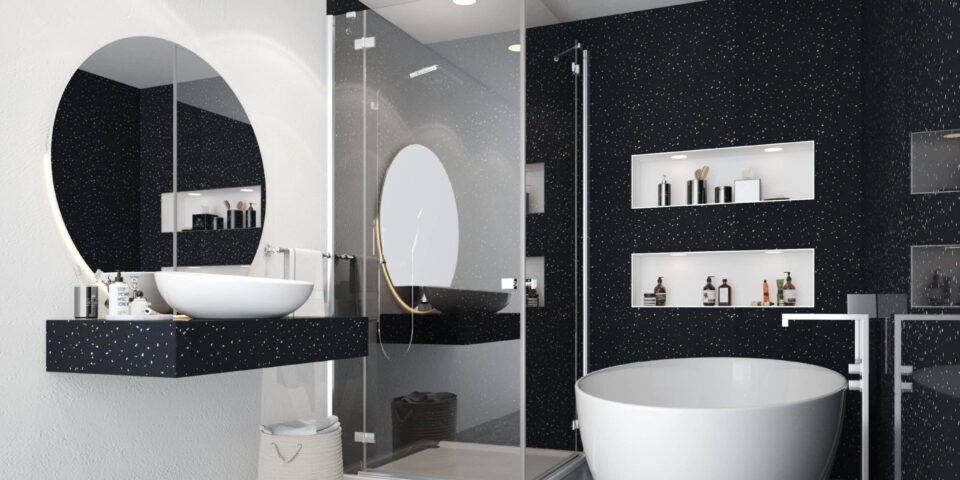
- Darker stone or marble effects black with white/gold veins, deep slate tones used as feature walls or in shower enclosures.
- Stone-effect wet wall panels that mimic materials like sandstone or granite, bringing depth and texture.
Why it works:
It gives the impression of luxury, and because the panels are large and waterproof, you avoid the maintenance of grout lines and the sealing that comes with natural stone.
Tips for use:
- For smaller bathrooms, choose lighter marble-effect panels to maximise light reflection.
- For a striking feature wall, go with dark marble or stone effect behind the bath or in the walk-in shower.
- Pair with minimalist fixtures (matte black, brass) to let the cladding stand out.

2. Matte Finishes & Industrial Textures
The era of high-gloss white is still around, but in 2025 many homeowners are embracing more subtle, textured finishes: matte concrete effect, industrial slate, and wood-effect panels that bring warmth and depth.
Key features:
- Concrete/industrial looks: soft matte concrete finishes suit modern, loft-style bathrooms.
- Wood-effect cladding: brings warmth to the space while using PVC or composite material to avoid moisture issues.
- Large-format panels: The fewer the joints, the more seamless the finish. These panels allow a continuous flow across the wall or shower enclosure.
Why it works:
Matte textured panels hide water spots, fingerprints and give a premium finish that feels less clinical than full gloss. The industrial/concrete look is also in vogue for 2025.
Tips for use:
- Choose a main wall (e.g., behind a vanity or bath) for the textured panel, and use complementary panels elsewhere.
- Balance the coolness of concrete or slate effect with warmer accessories (wood shelves, plants).
- Combine large-format matte panels with subtle lighting to highlight texture.

3. Bold Colours & Feature Walls
While neutral palettes remain dominant, 2025 is also seeing more homeowners in the UK using bold colours, jewel tones and pastels to create statement bathroom walls with their cladding systems.
Some examples:
- Jewel tones like emerald green, sapphire blue used on one feature wall, often in the shower area.
- Pastel tones (mint green, blush pink, powder blue) especially in family or guest bathrooms to achieve a more relaxed vibe.
- Contrasting bold colours with monochrome surroundings – e.g., a navy shower panel set within white walls.
Why it works:
These panels allow you to play with colour with far less risk than painting, and even less hassle than tiles. They create focal points and individuality in bathrooms.
Tips for use:
- If you choose a bold colour, limit it to one wall or the shower area to avoid overwhelming the space.
- Match accessories (towels, shelf décor) to the accent colour to tie in the look.
- For smaller bathrooms, use lighter colours in combination with bold accents to keep the space feeling open.

4. Large‐Format & Seamless Wet Wall Panels
Another major trend for 2025 in the UK is the move toward large-format and seamless wall panels in bathrooms particularly wet wall panels used in showers or wet rooms.
Key characteristics:
- Panels that span large widths (1000 mm or more) with minimal joints.
- Designed specifically for wet environments: “wet wall panels” or “shower panels” often come pre-sealed, fully waterproof.
- Faster installation and a cleaner look compared to tiling, with fewer grout lines and associated maintenance.
Why it works:
Less visual clutter means the bathroom feels bigger and cleaner. Also for high-traffic families, easier maintenance and faster installation are winning features.
Tips for use:
- Ensure proper substrate and preparation before installing large panels (some earlier negative reviews about PVC cladding show what can go wrong).
- Use the large-format panel as a full wall in the shower, then use complementary panels on other walls for consistency.
- Consider waterproofing and compatibility with your fixtures (taps, rails) to ensure a flush, neat finish.
5. Eco-Friendly & Smart Panel Options
As sustainability and smart home integration become more important, 2025 is also bringing innovation into the world of bathroom panels.
- Many manufacturers are offering recycled or recyclable PVC panels or composite panels made from sustainable materials.
- Smart wet wall panels are emerging: integrated LEDs, anti-fog technology, mirror finishes built in.
- The focus on environment-friendly materials means you can get high style with lower impact.
Why it works:
It matches the values of many UK homeowners who want design and responsibility. Plus, smart features enhance the bathroom everyday experience.
Tips for use:
- Check supplier claims around recyclability, material certifications and warranty.
- If choosing smart panels, ensure compatibility with your wiring, lighting and shower controls.
- For eco-friendly materials, pair with other sustainable fixings (low-flow taps, LED dimming) for a complete upgrade.

How to Choose the Right Panel for Your Bathroom
With so many styles and materials available, here’s a breakdown of considerations to help you decide:
Size of the room
- Small bathrooms: Light-toned panels (white, soft neutrals) and large-format for fewer joints help the space feel bigger.
- Larger bathrooms or en-suites: Feature wall panels (bold colour, dark stone effect) work well.
Location within the bathroom
- Shower area / wet zone: Choose panels marked for “wet wall panels” or “shower panels” fully waterproof, designed for splash zones.
- Full bathroom walls: Cladding can wrap around vanity, bath and walls to create a cohesive look.
- Ceiling or ceiling edge: Some panels can cover ceilings too, giving a full wrap effect.
Style & finish
- Want luxury hotel feel? Go marble/stone effect aqua panels with metallic accents.
- Prefer modern minimal? Matte concrete effect or wood-effect PVC panels with large format.
- Family-friendly or feature friendly? Pastels or bold colour accent wall with remaining walls in neutral.
- Eco/smart focus? Look for recycled PVC, integrated lighting or fog-resistant panels.
Practical considerations
- Waterproofing & installation: Ensure panels are installed to manufacturer instructions (substrate, bonding, trimming).
- Maintenance: Panels require less grout cleaning than tiles, easier wipe down.
- Budget: While panels may cost less than natural stone, quality varies consider durability, warranty and brand reputation.
- Future proofing: Trends change, but many of the finishes (stone-effect, neutral large-format) have staying power.
Installation & Maintenance Tips
- Always prepare the substrate properly: ensure walls are flat, dry, and stable before fixing cladding.
- Use trims and joints recommended by the manufacturer to maintain waterproofing.
- For shower panels, seal edges appropriately and ensure overflows/drains are well-sealed.
- Clean panels with non-abrasive products to protect finishes (especially gloss or textured surfaces).
- If you’re using smart panels (LED, anti-fog), check electronics are accessible for service.
- Consider lighting: Many trends like marble-effect or dark panels benefit from soft LED accent lighting to bring out veining and texture.

Final Thoughts: Transform Now
If you’re ready to transform your bathroom, in 2025 the combination of style, practicality and speed offered by modern cladding systems is compelling. Whether you opt for luxury marble-effect aqua panels, sleek matte concrete-style wet wall panels, vibrant bold colour bathroom panels or smart eco-friendly PVC solutions there’s a look and a system that can give you remarkable change in less time (and often cost) than a full tile re-do.
Go ahead and envision your space: perhaps a deep emerald green shower panel, paired with matte black fixtures and a stone-effect board on the bath wall. Or maybe a spa-calm retreat in warm beige marble effect with wood-look flooring and a soft pastel accent panel. The key is to pick a cohesive theme, choose the right material for your wet zone, and ensure a professional installation then your bathroom will feel fresh, stylish and ready for 2025 and beyond.

1 Comment